The USA is a funny country. It has never had a female president, and is apparently still not ready for one. Children are routinely asked if they want to be a fireman (boys) or a princess (girls). If you buy a train set for a girl, people look at you askance, accusing you through their stares of wanting to raise your daughter to be a lesbian (I kid you not). Very few people seem to mind that subtle messages are being conveyed to girls all the time via the media, via their toys, and the people around them. These were things that were in the news from time to time, still are, but were pretty remote, and mostly debating points, until Daughter1 was born.
When Daughter1 was born, I had not given much thought to how I would raise a daughter (or a son) ... I had vague ideas of raising my child "scientifically," and looking back, I can see that I had no real Definition of what that might mean. I had, and still have, lofty ideals, such as ensuring that my kids know medical quackery because that can kill them - homeopathy really gets my goat, for example. But three-year-olds are Not usually interested in learning about randomized double-blind placebo-controlled drug trials, and Daughter1 is no exception. I have
managed, however, to teach her to say "semiconductor" and "lugubrious" - "Papa makes semiconductor chips," and "I feel lugubrious today," so that puts me right up there in the league of parents who impose their unachieved dreams on their kids. (I dreamt of being able to say complex words when I was three.)
I did resolve to not impose the stereotypical doctor/engineer career decision on her, which felt like it occurred to my generation in India almost from the day we were born. I had not counted on her fascination for all things medical, and for a nurse in hospital to ask her, when she was about to be 3 years old, if she wanted to become a nurse or a doctor. Daughter1 was hooked - she hadn't realized till then that she could be this Authority figure when she grows up, and resolved that she wanted to be a doctor. Then she saw Toy Story 2, and wanted to be a cowgirl-doctor (actually doctor-ballerina-cowgirl, but I don't think she knew what a ballerina was). In the past week, however, she has decided she wants to be a cashier in her own grocery store, and has promised me free eggs (but not all groceries - for those I will have to pay).
The nurse was an exception - most people ask if she wants to be a princess. For example, when I took Daughter1 to the grocery store, the cashier asked her if she wanted to be a princess. Daughter1 replied that she wanted to be a cowgirl ... I wonder how long that lack of desire to be a princess will last. She already wants to get her ears pierced. Most girls seem to have their Ears pierced when they're a few months old - that's just wrong. Fortunately, Her pediatrician is on my side.
I don't know how long I will be able to protect her from the world of Barbie. At a birthday party for a colleague's daughter (where the father is of similar views), the father confided that he was dismayed at one of the gifts - a princess shoe set, with a set of nine shoes emblazoned with the faces of Disney princesses. A Barbie doll with accessories would have been the ultimate nightmare - how do you explain to a kid who is enamored by shiny choke-hazard plastic accessories and a doll famous for spouting "Math is hard," that you're afraid of the impact it will have on her future ability to soar in her career, that you feel it's inappropriate for her to end up thinking it's okay to be a mindless princess waiting for Prince Charming to come along and carry her off without a proper period of courtship, background checks (for criminal behavior), blood tests, and possibly a dental exam for gingivitis?
How big a problem is the media in all this? Huge, but can't blame anyone too long. The media is successful because that's what people pay for. If people really wanted less stereotyping, why would Disney feel compelled to have Quasimodo turn into a handsome prince at the end of "The Hunchback of Notre Dame" (Disney-ishtyle)? Is it so bad that the gel in "The Hunchback" liked a fella who was out of the standard distribution. Heck, the whole Cinderella and the Prince-with-foot-fetish story is way older than Disney, though Disney has certainly perpetuated the problem. (Yes, I realize that Disney distributed Toy Story 2, which has a strong female character that led Daughter1 to decide to be a cowgirl. I'm talking gross generalities here.)
Public television is a welcome respite to this, though not without exception. The one exception I know of is the title song in "Maya and Miguel," which is a cartoon about a set of twins, where there is a line That goes, "he leads with his head, and she follows her heart." Why does the sister not use her brains? On the other hand, there's "Arthur," who's mum has a career, who's friend Francine is a soccer-playing bully, and where Muffy is a shopping-addicted object of ridicule. PBS also has "Ruff with Ruff Ruffman," where the girls routinely show that they're as good as
the boys (as they did on "Zoom" before it was cancelled), and Wendy is a perfectly capable builder on "Bob the Builder".
So, now that it's wrap-up time, what am I going to do?
1. Avoid Barbie,
2. Avoid Disney Princesses,
3. If she must watch TV, let her watch Toy Story 2 and PBS cartoons,
but not Maya and Miguel if I can help it,
4. Teach her about exercise,
5. Convince her to always use a seatbelt,
6. Teach her about sensible shoes when she sees women in stiletto
heels, though that will hopefully be a long time away,
7. See what I can do about green leafy vegetables in her diet,
8. Get her started on learning about epidemiological testing and
randomized double-blind placebo-controlled drug trials.
And since she wanted to be a doctor, I've already bought her a toy
stethoscope. The cashier thing is new, I don't know what toys to get
her for that.
By,
Speck42
(speck42[at]gmail[dot]com)
Tuesday, January 02, 2007


Tuesday, November 28, 2006
The humble auto adapts to a changing customer profile
Rather a pompous title for a simple, short post. ;-)
Anyone noticed how autos that carry children to school have changed ? It is really interesting to note the ways in which auto owners have adapted their vehicles to this role.
When we were kids, autos which ferried kids to school had a thin wooden plank opposite the main seat in order to accommodate a few more kids, while the rest stood in between the main seat and the wooden plank. Nowadays there is a wooden plank on the luggage area behind the main seat too, so even more kids can be accommodated, though what this does to the stability of autos on sharp turns I shudder to imagine ! So that school bags do not take up precious sitting space, these are hung from hooks at the back of the auto, on the outer side. And then often, the openings at the side of the auto have metal grills (grills, not the regular wooden rod) with a latch so that the little brats don’t fall out.
Am quite impressed with the improvements in this humble, everyday vehicle. Anyone got any more such examples to share, I’d love to hear about them.
Anyone noticed how autos that carry children to school have changed ? It is really interesting to note the ways in which auto owners have adapted their vehicles to this role.
When we were kids, autos which ferried kids to school had a thin wooden plank opposite the main seat in order to accommodate a few more kids, while the rest stood in between the main seat and the wooden plank. Nowadays there is a wooden plank on the luggage area behind the main seat too, so even more kids can be accommodated, though what this does to the stability of autos on sharp turns I shudder to imagine ! So that school bags do not take up precious sitting space, these are hung from hooks at the back of the auto, on the outer side. And then often, the openings at the side of the auto have metal grills (grills, not the regular wooden rod) with a latch so that the little brats don’t fall out.
Am quite impressed with the improvements in this humble, everyday vehicle. Anyone got any more such examples to share, I’d love to hear about them.
Monday, November 20, 2006
Hindi Chini Bhai Bhai ?

For how can man die better
Than facing fearful odds
For the ashes of his fathers
And the temple of his gods.
Quote at a war memorial in Tawang where the names of all the Indian soldiers who died in the 1962 war are listed.
Until I visited Arunachal earlier this year, the 1962 India-China war was just a number in a history textbook to me, one among many to be mugged up and repeated when asked for. I had no idea about the magnitude of the conflict, or of the extent to which Indian borders had been violated.
Somehow reading about a war or even watching documentaries / movies about it never brings it home to one as forcefully as actually visiting the battlefield does. Though we started out on a trekking plus tourism trip, we ended up getting a forceful introduction to our history, a reminder of our tenuous existence as a nation and a sense of gratitude to the army for being there.
It began one cold morning when the only place we could find that would give us breakfast was an army canteen at a height of 11,000 ft - nothing builds loyalty as fast as hot food and piping hot tea on a cold morning ! Then we drove on, higher still, and reached Sela Pass which was covered in snow. After having spent an arduous two days trekking in snow, watching army jawans at the camp made me really sympathise with those who have to live and work in such conditions for months on end.
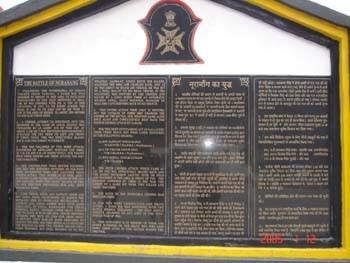
A bit ahead of Sela Pass is the Jaswantgad war memorial, a memorial to Jaswant Singh, a Garhwal Rifles Soldier who helped by two local girls, defended his post against the Chinese for three days. I am sure that were this memorial to be in a park in a city somewhere, it would not have evoked strong emotions in me. But here in this lonely, desolate, grand, majestic setting, one cannot look at it, shrug and walk on; something tugs strongly at you. And you
realise that a soldier from an alien land had attempted to own this piece of land, maybe even strutted about somewhere close by assuming that the land would soon be his, and you begin to feel …………angry, hurt, bewildered.
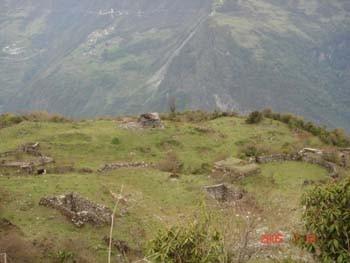
Bewildered because I never realised till then how far into India the Chinese army had advanced, and am amazed that our history books so lightly gloss over this fact. Bewildered because I realise I do not know my country and it’s history at all. Bewildered when later on I see bunkers on the hillside and realise that I never before understood the difference between bunkers and trenches properly. Still bewildered when we drive past Tawang town the next day and find the hillside dotted with bunkers – somehow a sense of the enormity of the war grows on me day by day.
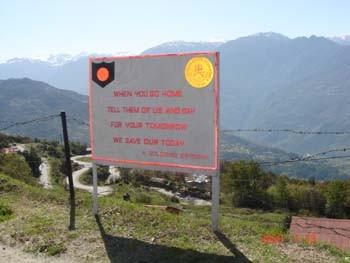
When you go home
Tell them of us and say
For your tomorrow
We gave our today.
Another quote at a war memorial for the Indian soldiers that perished in 1962
By,
Zenobia.
Just a short ramble
Just a short post – written in a hurry – that’s my excuse for any factual or grammatical errors.
This post is prompted by a stray comment a friend made about the results of a reality dance competition called ‘Jhalak Dikhlaa Jaa’ - we behave in small groups exactly in the same manner in which we behave as a nation, and vote on irrelevant criteria for the wrong person.
Before I continue, let me admit that I have watched all of ten minutes of one episode of ‘Jhalak Dikhlaa Jaa’ and have read about it once or twice in the papers – that’s all the background there is to this post. The finals of JDJ had Mona Singh (Jassi) competing against Shweta Salve, and the results were decided by viewer’s votes. Shweta Salve was the superior dancer by far, but Mona Singh had the popularity of her Jassi days to support her and she won. This led my friend to comment that if we Indians keep voting on the basis of irrelevant criteria, then we deserve the kind of leaders we have.
This post is prompted by a stray comment a friend made about the results of a reality dance competition called ‘Jhalak Dikhlaa Jaa’ - we behave in small groups exactly in the same manner in which we behave as a nation, and vote on irrelevant criteria for the wrong person.
Before I continue, let me admit that I have watched all of ten minutes of one episode of ‘Jhalak Dikhlaa Jaa’ and have read about it once or twice in the papers – that’s all the background there is to this post. The finals of JDJ had Mona Singh (Jassi) competing against Shweta Salve, and the results were decided by viewer’s votes. Shweta Salve was the superior dancer by far, but Mona Singh had the popularity of her Jassi days to support her and she won. This led my friend to comment that if we Indians keep voting on the basis of irrelevant criteria, then we deserve the kind of leaders we have.
Saturday, October 21, 2006
Cup of Joe
Did you see the Dilbert comic-strip today?
It's pretty funny :-) ! I think I should also get oneof those coffee backpacks. One cup of coffee no longer seems to have any effect on me keeping awake in the afternoons at the work!
I don't even remember exactly when I learnt to drink strong coffee. When I was small, like all kids, me and my sis had to drink two (sometimes three) glasses of milk a day. No coffee or tea though - only Horlicks, Boost, Bournvita and the like. Coffee/tea were apparently not good for health. My sister had no issues with this - she simply detested coffee and tea and was quite content with the other beverage mixes - or at least as content as you can be when being forced to drink a tall glass of milk. Me, on the other hand, always had a strange attraction towards the smell of coffee.
So usually, mostly on weekends, my mom used to add a couple of drops of coffee to my milk with sugar. It gave a coffee-ish smell to the milk and I simply loved it! I still can remember me sitting, knees pulled upto my chest on a high stool (yeah, those were thedays when I could comfortably fit into such a small area) in a corner of the room as I drank it. I don't know why clambering onto the stool was important but it was a ritual for me!
Then, as I grew older, I started discovering the joys of tea. I still could tolerate only a very, very milky version of coffee. But tea - ah, that was something else! My dad is a tea lover too. During the weekends,mid-morning, dad would ask for a cup of chai. While giving dad his cup, mom would give me about two gulps of the tea in a tumbler. Dad and me would then drink our respective teas. Bliss!
As I grew older, my love for tea grew along with me.I still had to drink milk everyday but I could drink tea in the evenings. Tea was the first "dish" I learnt to make by myself. Given my addiction, it was easier to make tea myself than keep bugging mom for tea!However, during the "important" board-exam years,mom would make it for me if she found me studying late at night. But then, at some point, I was downing so many glasses of tea a day that my stomach started to hurt. Thus came the end of the endless-cups-of-tea era.Sigh!
Then, it was onto college. There, in the hostel, in the mornings, we used to get milk. Initially, I used to buy Horlicks, Boost or Bournvita to add to the milk and drink. But I noticed that the contents of thebottles got over pretty quick as every visitor to the room happily helped themselves to it. Really, the Horlicks "kudikka vendaam, appadiyey chaapuduvein"(no need to drink, I will eat it just like that) slogan never had better proof :-)!
In case you have never been in a typical hostel, hostel milk looks like white-colored water and is impossible to drink without some masking agent.Clearly, I needed something else to mix with the milk. So, I decided to switch over to the instant coffee powder that was provided by the hostel mess. I realized that more coffee powder made me feel more awake (ah, caffeine) and the strength of my coffees started increasing! I guess undergrad was where I learnt to drink the non-milky version of coffee. I was surprised at myself - I was actually enjoying drinking something which I always used to claim was too bitter!
That was until I came to the U.S. For the first time in my life, I drank black coffee. Basically my lab had run out of sugar and creamer and I was desperate for something warm to keep me awake through the night.Black coffee served the purpose well though rather bitterly.
However, as compensation, my apartment had a tea-loving roommate. So we used to take turns makingtea every morning and evening (if we were home). And then another cool thing happened. We got J as our roommate. If I thought I was a tea-addict, J must have probably had tea running through her veins!She loved to not only drink tea but also to MAKE tea!I tell you, it's bliss when you can look up from thebook you are reading and tell "J, lets have chai" and have a steaming mug of tea placed in your hand soon afterwards :-) !
But soon, it was time to get to the real world and work. For the first one year of my work-life, for some reason, I never drank coffee at work. It was just tea. I remember my colleague saying "Oh, you don't drink coffee? Then probably you don't smoke or drink either." - LOL :-) !
Then at some point, I can't remember why, I started drinking coffee at work in the mornings. And then added a cup in the afternoons too! Sigh! Nowadays, I proactively make fresh coffee to drink if I can't find some! Naturally, now I am finding that the normal dosage is not enough to keep me awake (even if it is mostly psychological for me anyways).
By,
Archana B.
(http://archana.blogspot.com/)
It's pretty funny :-) ! I think I should also get oneof those coffee backpacks. One cup of coffee no longer seems to have any effect on me keeping awake in the afternoons at the work!
I don't even remember exactly when I learnt to drink strong coffee. When I was small, like all kids, me and my sis had to drink two (sometimes three) glasses of milk a day. No coffee or tea though - only Horlicks, Boost, Bournvita and the like. Coffee/tea were apparently not good for health. My sister had no issues with this - she simply detested coffee and tea and was quite content with the other beverage mixes - or at least as content as you can be when being forced to drink a tall glass of milk. Me, on the other hand, always had a strange attraction towards the smell of coffee.
So usually, mostly on weekends, my mom used to add a couple of drops of coffee to my milk with sugar. It gave a coffee-ish smell to the milk and I simply loved it! I still can remember me sitting, knees pulled upto my chest on a high stool (yeah, those were thedays when I could comfortably fit into such a small area) in a corner of the room as I drank it. I don't know why clambering onto the stool was important but it was a ritual for me!
Then, as I grew older, I started discovering the joys of tea. I still could tolerate only a very, very milky version of coffee. But tea - ah, that was something else! My dad is a tea lover too. During the weekends,mid-morning, dad would ask for a cup of chai. While giving dad his cup, mom would give me about two gulps of the tea in a tumbler. Dad and me would then drink our respective teas. Bliss!
As I grew older, my love for tea grew along with me.I still had to drink milk everyday but I could drink tea in the evenings. Tea was the first "dish" I learnt to make by myself. Given my addiction, it was easier to make tea myself than keep bugging mom for tea!However, during the "important" board-exam years,mom would make it for me if she found me studying late at night. But then, at some point, I was downing so many glasses of tea a day that my stomach started to hurt. Thus came the end of the endless-cups-of-tea era.Sigh!
Then, it was onto college. There, in the hostel, in the mornings, we used to get milk. Initially, I used to buy Horlicks, Boost or Bournvita to add to the milk and drink. But I noticed that the contents of thebottles got over pretty quick as every visitor to the room happily helped themselves to it. Really, the Horlicks "kudikka vendaam, appadiyey chaapuduvein"(no need to drink, I will eat it just like that) slogan never had better proof :-)!
In case you have never been in a typical hostel, hostel milk looks like white-colored water and is impossible to drink without some masking agent.Clearly, I needed something else to mix with the milk. So, I decided to switch over to the instant coffee powder that was provided by the hostel mess. I realized that more coffee powder made me feel more awake (ah, caffeine) and the strength of my coffees started increasing! I guess undergrad was where I learnt to drink the non-milky version of coffee. I was surprised at myself - I was actually enjoying drinking something which I always used to claim was too bitter!
That was until I came to the U.S. For the first time in my life, I drank black coffee. Basically my lab had run out of sugar and creamer and I was desperate for something warm to keep me awake through the night.Black coffee served the purpose well though rather bitterly.
However, as compensation, my apartment had a tea-loving roommate. So we used to take turns makingtea every morning and evening (if we were home). And then another cool thing happened. We got J as our roommate. If I thought I was a tea-addict, J must have probably had tea running through her veins!She loved to not only drink tea but also to MAKE tea!I tell you, it's bliss when you can look up from thebook you are reading and tell "J, lets have chai" and have a steaming mug of tea placed in your hand soon afterwards :-) !
But soon, it was time to get to the real world and work. For the first one year of my work-life, for some reason, I never drank coffee at work. It was just tea. I remember my colleague saying "Oh, you don't drink coffee? Then probably you don't smoke or drink either." - LOL :-) !
Then at some point, I can't remember why, I started drinking coffee at work in the mornings. And then added a cup in the afternoons too! Sigh! Nowadays, I proactively make fresh coffee to drink if I can't find some! Naturally, now I am finding that the normal dosage is not enough to keep me awake (even if it is mostly psychological for me anyways).
By,
Archana B.
(http://archana.blogspot.com/)
Tuesday, October 10, 2006
Review of 'Seven Islands and a Metro'
Summary - An interesting movie, albeit one that might have benefited from with crisper editing. On the whole, I enjoyed the movie, though I felt some parts just dragged on for far too long. A must – see for all those who love Bombay, an added attraction is the use of Saadat Hasan Manto and Ismat Chughtai as narrators. The archaic language that Manto and Ismat speak in is charming. I have read some short stories by Manto before, gave me a thrill to recognise some of them in Manto’s dialogues. Though too many of his partition stories were used in the context of the Bombay riots - just one of those would have been far more effective.
The movie delves – err actually makes brief dips into - the lives of all who make up ‘Aamchi Mumbai’- the bar girls, mill workers, night-time tea sellers (the guys who wander around on cycles with a can of tea and plastic cups), construction site workers, kolis (fisherfolk), rich Jains, Christians, Parsis…..everyone.
It introduces one to the history of this city, the forces that have shaped it, how it is changing and why, and the turmoil that the change is causing. I loved the way they introduce the heterogeneity of the people who make up Bombay by combining the visuals of identity papers and the vocals in the background of various people answering an impersonal babu’s questions about their identity. Also loved the picturisation of the 7 islands of Bom Bahai metamorphosing into Bombay.
There were lots of small facts about the city that this movie brought to light. Though I have relished fried Boomla (Bombil in Marathi, Bombay Duck in English) for years, it was during the movie that I realised that they had really sharp teeth. Really enjoyed seeing how their jaws are used to hang them out to dry, and listening to the old Parsi lady and the not-so-old Maharashtrian woman describing the ‘right’ way to cook Boomla.
Another interesting fact about Bombay. In the 1980s, there were 2,32,000 mill workers in this city. Now there are only 30,000 !! I never realised the magnitude of this decrease. Suddenly I want to know what happened to those people, where did they go ? How many of them are currently unemployed ? How many are employed and in what capacity ? By how much has their income / living standard dropped, if at all ? Where do they live now ?
Through snippets of conversations with actual people, the movie takes a look at the social and economic forces that cause tension in the social fabric of the city. The kolis who are angry that no one visits the fish markets anymore as North Indian ‘lungiwalas’ go door-to-door selling fish. The rich vegetarian people who moved into a newly constructed building near a koliwada and now want to evict the original kolis because the smell of fish bothers them. The cemeteries that have been encroached upon by shanties. The pushing and jostling for precious inches of space that causes tempers to rise. The communal tension. The economic disparity. Enough reasons for serious concern about this wonderful city’s future.
I walked out of the theatre with the warm feeling like one gets when you meet a good friend after a long time and spend time going through his/her childhood snaps. Even though in the process of the conversation you may discover that your friend is currently unwell, and you may be concerned about that; when you go back home at night, the overriding feeling is one of happiness at having got back in touch with your friend again.
By,
Zenobia D. Driver
The movie delves – err actually makes brief dips into - the lives of all who make up ‘Aamchi Mumbai’- the bar girls, mill workers, night-time tea sellers (the guys who wander around on cycles with a can of tea and plastic cups), construction site workers, kolis (fisherfolk), rich Jains, Christians, Parsis…..everyone.
It introduces one to the history of this city, the forces that have shaped it, how it is changing and why, and the turmoil that the change is causing. I loved the way they introduce the heterogeneity of the people who make up Bombay by combining the visuals of identity papers and the vocals in the background of various people answering an impersonal babu’s questions about their identity. Also loved the picturisation of the 7 islands of Bom Bahai metamorphosing into Bombay.
There were lots of small facts about the city that this movie brought to light. Though I have relished fried Boomla (Bombil in Marathi, Bombay Duck in English) for years, it was during the movie that I realised that they had really sharp teeth. Really enjoyed seeing how their jaws are used to hang them out to dry, and listening to the old Parsi lady and the not-so-old Maharashtrian woman describing the ‘right’ way to cook Boomla.
Another interesting fact about Bombay. In the 1980s, there were 2,32,000 mill workers in this city. Now there are only 30,000 !! I never realised the magnitude of this decrease. Suddenly I want to know what happened to those people, where did they go ? How many of them are currently unemployed ? How many are employed and in what capacity ? By how much has their income / living standard dropped, if at all ? Where do they live now ?
Through snippets of conversations with actual people, the movie takes a look at the social and economic forces that cause tension in the social fabric of the city. The kolis who are angry that no one visits the fish markets anymore as North Indian ‘lungiwalas’ go door-to-door selling fish. The rich vegetarian people who moved into a newly constructed building near a koliwada and now want to evict the original kolis because the smell of fish bothers them. The cemeteries that have been encroached upon by shanties. The pushing and jostling for precious inches of space that causes tempers to rise. The communal tension. The economic disparity. Enough reasons for serious concern about this wonderful city’s future.
I walked out of the theatre with the warm feeling like one gets when you meet a good friend after a long time and spend time going through his/her childhood snaps. Even though in the process of the conversation you may discover that your friend is currently unwell, and you may be concerned about that; when you go back home at night, the overriding feeling is one of happiness at having got back in touch with your friend again.
By,
Zenobia D. Driver
Monday, October 09, 2006
5 Tips on Networking at Seminars
The other day one of my friends called me up in a bit of a panic. She was attending a seminar on the Plastics Industry in India as a part of her new job. She was thoroughly enjoying dozing through the day in her chair at the back of the room. But she was dreading lunch hour when she was supposed to 'network' with people, which was officially the main purpose of attending the conference. Having worked in a long series of jobs not involving such public networking, she was, understandably, panicking.
Having spent more than six years in client facing roles, I have managed to pick up quite a few tips on attending such conferences and am glad to be able to share it with all my friends who may be stuck in seminars on the Plastics Industry in India in the future.
1. Be there. The main purpose of a seminar is to network and every veteran knows this. Come lunch hour, and before you can say 'Shall we have lunch?' you will see the cards flying thick and fast. To make use of this, all you need to do is look confident and position yourself in the busiest spot in the area (Not the food table. People are usually focused and aggressive around there). As my friend discovered, 'they are dropping cards like confetti'.
2. Time it. The best time to network is the pre-conference cocktail. People are at a loose end because the event has not yet started and if you just spend your time standing alone nursing a drink you will look like an alcoholic. On the other hand if you stand with someone else who is also nursing a drink, you will look like an industry professional. The same holds true for the pre-conference coffee in case of day-time seminars
3. Circulate. This is not as tough as it sounds. Just listen to one of the world's silliest jokes from a perfect stranger trying to make polite conversation, and your survival instincts will automatically kick in and you make a move.
4. Catch them alone. Every conference will have at least three or four people who have turned up by themselves in a genuine effort to follow the trends in the Plastics Industry and are uncomfortable with the socializing part. Yet secretly, in order not to be branded an alcoholic (refer point 2) or a gourmand (modification of point 2), they would like someone to talk to. You may or may not find them useful in the course of your professional life but at that point in time when your boss turns around to check on how you are doing, instead of looking like a lost kid you can confidently give that quick smile that says 'Later. I am busy talking to this guy who will single handedly give us USD 100 M of future busines' );
5. Stupid talk is OK. Most people are intimidated by the fact that when they actually do enter into a conversation with a stranger they may reveal the fact that they are not Nobel-prize material. Veterans will tell you that rarely do the conversations go beyond the score of the cricket match going on currently or the general inefficiency of the organiser in managing time. Then someone will crack a bad joke and everyone goes 'har har har' and exchanges cards and you move on (Point 3 above).
If nothing works and it is becoming obvious that the room has conspired to make you stand out like a miserable and boring loser then it is time to use your cell phone. Whip out your cell phone and have a brisk, solemn-looking conversation on it that signals to people around you that you are checking the London markets to see how freight prices have moved and whether it is time to hedge. You may not have collected visiting cards at the end of it but at least you look like you are too busy managing your current life to be bothered with getting to know a pathetic bunch of half-wits who clearly have no other business other than cracking jokes on cricket. Then put off phone with a sweeping click, smile smugly and exit into the bathroom where you can burst into tears undisturbed.
By Anita B.
( more posts by Anita on http://royalvilla.blogspot.com)
Having spent more than six years in client facing roles, I have managed to pick up quite a few tips on attending such conferences and am glad to be able to share it with all my friends who may be stuck in seminars on the Plastics Industry in India in the future.
1. Be there. The main purpose of a seminar is to network and every veteran knows this. Come lunch hour, and before you can say 'Shall we have lunch?' you will see the cards flying thick and fast. To make use of this, all you need to do is look confident and position yourself in the busiest spot in the area (Not the food table. People are usually focused and aggressive around there). As my friend discovered, 'they are dropping cards like confetti'.
2. Time it. The best time to network is the pre-conference cocktail. People are at a loose end because the event has not yet started and if you just spend your time standing alone nursing a drink you will look like an alcoholic. On the other hand if you stand with someone else who is also nursing a drink, you will look like an industry professional. The same holds true for the pre-conference coffee in case of day-time seminars
3. Circulate. This is not as tough as it sounds. Just listen to one of the world's silliest jokes from a perfect stranger trying to make polite conversation, and your survival instincts will automatically kick in and you make a move.
4. Catch them alone. Every conference will have at least three or four people who have turned up by themselves in a genuine effort to follow the trends in the Plastics Industry and are uncomfortable with the socializing part. Yet secretly, in order not to be branded an alcoholic (refer point 2) or a gourmand (modification of point 2), they would like someone to talk to. You may or may not find them useful in the course of your professional life but at that point in time when your boss turns around to check on how you are doing, instead of looking like a lost kid you can confidently give that quick smile that says 'Later. I am busy talking to this guy who will single handedly give us USD 100 M of future busines' );
5. Stupid talk is OK. Most people are intimidated by the fact that when they actually do enter into a conversation with a stranger they may reveal the fact that they are not Nobel-prize material. Veterans will tell you that rarely do the conversations go beyond the score of the cricket match going on currently or the general inefficiency of the organiser in managing time. Then someone will crack a bad joke and everyone goes 'har har har' and exchanges cards and you move on (Point 3 above).
If nothing works and it is becoming obvious that the room has conspired to make you stand out like a miserable and boring loser then it is time to use your cell phone. Whip out your cell phone and have a brisk, solemn-looking conversation on it that signals to people around you that you are checking the London markets to see how freight prices have moved and whether it is time to hedge. You may not have collected visiting cards at the end of it but at least you look like you are too busy managing your current life to be bothered with getting to know a pathetic bunch of half-wits who clearly have no other business other than cracking jokes on cricket. Then put off phone with a sweeping click, smile smugly and exit into the bathroom where you can burst into tears undisturbed.
By Anita B.
( more posts by Anita on http://royalvilla.blogspot.com)
Monday, October 02, 2006
Happy Birthday !
Belated Happy Birthday Everyone !
Yes, this blog is now over a year old ! The first post on this blog was on August 22nd last year. All those of you who have contributed to the blog, thanks a ton. Those who have not - the rest of us want a birthday present - the most appropriate would be to write something and send it in.
Happy Birthday again !
Yes, this blog is now over a year old ! The first post on this blog was on August 22nd last year. All those of you who have contributed to the blog, thanks a ton. Those who have not - the rest of us want a birthday present - the most appropriate would be to write something and send it in.
Happy Birthday again !
Monday, September 18, 2006
Movie Review - 'House of Flying Daggers'
Its funny writing a review of a movie, nearly two years after it was released to much acclaim. It is a pity that HOFD took so much time to come to India. And it is an even bigger pity that it runs only for a couple of shows in Bangalore, the other slots being taken by an Indian Indiana Jones movie called “Naksha”.
HOFD has a gossamer storyline. It is the time of anarchy during the Tang dynasty, late ninth century. Various rebel groups are fighting the government and HOFD is one of the leading bunch of anarchists. A policeman, Jin, is sent to a brothel called Peony Pavilion in disguise to check out intelligence that a rebel is hiding there. There he runs into Mei, a blind courtesan, who is arrested after a dazzling dance sequence (the Echo Dance) on the presumption that she is the daughter of a leader of HOFD who was killed by the police. She is later helped to escape by Jin himself, who is acting as a mole to follow Mei to the HOFD. Jin and Mei are chased by soldiers and they fall in love after some elaborately staged fight (or dance) sequences across jungles, meadows, mountains and bamboo forests. Or are they just acting to be in love to meet their own motives. Some more surprises are in store and there is nicely spun tale of morality, love (there is even a love triangle) ending in a climax which is tragic and elemental. HOFD is a love story and please do not go expecting an action movie; the movie is not actually short of action sequences and indeed uses these to propel the love story forward.
Words like operatic and symphonic abound reviews of HOFD. For me personally, whose understanding of either operas or symphonies is next to zero, HOFD is a simply wonderful return to film making in its most pristine and unspoiled form. Films like “Crouching Tiger..”, “Hero” and now “HOFD” show the world and especially Hollywood a way of filmmaking which seem to have been forgotten. That cinema is primarily a visual (and aural) art form, in colour and texture. HOFD re-emphasises this in greater grandeur than ever before. The costumes are lavish and the art direction intricate (witness the floor design and the wall work in the Echo Dance. The action sequences are breathtaking and as (or more) wonderfully choreographed than the ones in Crouching Tiger or Hero (which to me was more mechanical than fluid). You are just dazzled by the way special effects have been integrated into the action.
Some of the sequences are truly memorable scene-of-the-decade ventures. ¬The Echo Dance in the beginning where Mei has to dance to the pat of a bean/ seed on a drum and the Bamboo Fight with its astonishing colours, sounds and movements are both sequences of unadulterated visceral glory. You want to tip your hat to the directors ability to imagine, leave aside execute, these scenes. Even some of the sensitive scenes are shot very well, like the scene were Jin gallops on a horse around a meadow sweeping flowers to give to the blind Mei and the panning shots of Mei and Jun in the meadows after a frantic love-making session. One can just go on.
The music and cinematography are the high points of the movie. Unlike the earlier named Chinese movies which had music by the brilliant Tan Dun, this has music by Shigeru Umebayashi who managed to reach the immense heights scaled by Tan Dun in both “Crouching” and “Hero”. Zhang Yimou, one of the greatest Chinese directors, has been called a “visual sensualist” by some. Movies of Zhang Yimou (himself a photographer) have always had brilliant composition and shot-taking. Colour for him is like dialogue to a Woody Allen movie. Here it is not as in-your-face as the colour- coded “Hero”, but simpler and still elegant and recalls all the visual splendour of Zhang’s earlier movies.
More interestingly, the career of director Zhang Yimou seem to echo the stage and growth of the Chinese economy. In his earlier classics like Red Sorghum, Raise the Red Lantern and Ju Dou made around the time of the student rebellion, he ran afoul of the government. However, the growing integration of Chine into the world economy seems to have made him return to more simple story-telling in movies like Hero and HOFD, though not in any way diluting his auteur status. I wonder what sociological conclusions to make from this, it is either mute indifference or an acceptance of the economic boom in China.
HOFD is “rich” in the way Hollywood movies were in the 50s when they were trying to battle television. The movie is a true feast to the senses, a riot of colour and music. I guess you may not catch it on the screen but a DVD rental is surely due. After seeing these movies, I wonder why we, with an equally strong mythology and folklore, don’t venture anywhere near what the Chinese have been doing.
By,
Guthikonda Vamshidhar
(http://guthikonda@blogspot.com)
HOFD has a gossamer storyline. It is the time of anarchy during the Tang dynasty, late ninth century. Various rebel groups are fighting the government and HOFD is one of the leading bunch of anarchists. A policeman, Jin, is sent to a brothel called Peony Pavilion in disguise to check out intelligence that a rebel is hiding there. There he runs into Mei, a blind courtesan, who is arrested after a dazzling dance sequence (the Echo Dance) on the presumption that she is the daughter of a leader of HOFD who was killed by the police. She is later helped to escape by Jin himself, who is acting as a mole to follow Mei to the HOFD. Jin and Mei are chased by soldiers and they fall in love after some elaborately staged fight (or dance) sequences across jungles, meadows, mountains and bamboo forests. Or are they just acting to be in love to meet their own motives. Some more surprises are in store and there is nicely spun tale of morality, love (there is even a love triangle) ending in a climax which is tragic and elemental. HOFD is a love story and please do not go expecting an action movie; the movie is not actually short of action sequences and indeed uses these to propel the love story forward.
Words like operatic and symphonic abound reviews of HOFD. For me personally, whose understanding of either operas or symphonies is next to zero, HOFD is a simply wonderful return to film making in its most pristine and unspoiled form. Films like “Crouching Tiger..”, “Hero” and now “HOFD” show the world and especially Hollywood a way of filmmaking which seem to have been forgotten. That cinema is primarily a visual (and aural) art form, in colour and texture. HOFD re-emphasises this in greater grandeur than ever before. The costumes are lavish and the art direction intricate (witness the floor design and the wall work in the Echo Dance. The action sequences are breathtaking and as (or more) wonderfully choreographed than the ones in Crouching Tiger or Hero (which to me was more mechanical than fluid). You are just dazzled by the way special effects have been integrated into the action.
Some of the sequences are truly memorable scene-of-the-decade ventures. ¬The Echo Dance in the beginning where Mei has to dance to the pat of a bean/ seed on a drum and the Bamboo Fight with its astonishing colours, sounds and movements are both sequences of unadulterated visceral glory. You want to tip your hat to the directors ability to imagine, leave aside execute, these scenes. Even some of the sensitive scenes are shot very well, like the scene were Jin gallops on a horse around a meadow sweeping flowers to give to the blind Mei and the panning shots of Mei and Jun in the meadows after a frantic love-making session. One can just go on.
The music and cinematography are the high points of the movie. Unlike the earlier named Chinese movies which had music by the brilliant Tan Dun, this has music by Shigeru Umebayashi who managed to reach the immense heights scaled by Tan Dun in both “Crouching” and “Hero”. Zhang Yimou, one of the greatest Chinese directors, has been called a “visual sensualist” by some. Movies of Zhang Yimou (himself a photographer) have always had brilliant composition and shot-taking. Colour for him is like dialogue to a Woody Allen movie. Here it is not as in-your-face as the colour- coded “Hero”, but simpler and still elegant and recalls all the visual splendour of Zhang’s earlier movies.
More interestingly, the career of director Zhang Yimou seem to echo the stage and growth of the Chinese economy. In his earlier classics like Red Sorghum, Raise the Red Lantern and Ju Dou made around the time of the student rebellion, he ran afoul of the government. However, the growing integration of Chine into the world economy seems to have made him return to more simple story-telling in movies like Hero and HOFD, though not in any way diluting his auteur status. I wonder what sociological conclusions to make from this, it is either mute indifference or an acceptance of the economic boom in China.
HOFD is “rich” in the way Hollywood movies were in the 50s when they were trying to battle television. The movie is a true feast to the senses, a riot of colour and music. I guess you may not catch it on the screen but a DVD rental is surely due. After seeing these movies, I wonder why we, with an equally strong mythology and folklore, don’t venture anywhere near what the Chinese have been doing.
By,
Guthikonda Vamshidhar
(http://guthikonda@blogspot.com)
Thursday, August 03, 2006
Sounds
When I was in 8th grade (1988), my mum and dad finally relented and got me what passed for a hi-fi back in the day. It was a breathtaking experience to finally hear music the way it was meant to be heard, off an Aiwa deck, with a signal-to-noise ratio >75 dB (which was the best you could get in those days without selling vital organs), a Cosmic amp (local brand, dunno what happened to them), and 3-way bookshelf speakers made by goodness knows who. The sound of Herb Alpert's "African Flame" playing on that system in the night, with the windows wide open (reduces echos), and the lights dimmed (makes the dancing LEDs more psychedelic) used to bring a smile to anyone used to a 2W Hitachi cassette player made in 1978 ( i.e., me).
Along with the purchase, I persuaded the dad-man to buy me a tape of AC/DC's "Blow Up Your Video" - he didn't know who AC/DC was, though I doubt he thought it was anything to do with electricity. And starting with that tape, I learned the meaning of generation-gap. My mum and dad did not get why I liked AC/DC, and later, Pink Floyd, U2, and name-your-mainstream-rock-band. Their idea of good western music was Kenny G, Connie Francis, Cliff Richard, and Abba, though if they really were given a choice, they'd go with silence.
In 1993, when I moved to IITB, I took with me ... the Hitachi casette player, which had been serviced back into shape. In 2003, 6 years after I left India, and 10 years after I moved to IITB, the hi-fi was a distant memory, having been left behind in India, where it had disintegrated and been sold to the local electronics shop, and replaced by my parents with a boombox which probably sounded good enough. In my grad-student apartment was an Aiwa boombox, I hardly ever played tapes (and I don't even know where that AC/DC tape is), and most of my music is on the computer. The occasional CD I purchased was quickly transferred to the computer so I could loop the songs into endless playlists.
When I started playing music to my first-born (who was a few months old in 2003), I started her off with Creedence Clearwater Revival, Scissor Sisters, Beastie Boys, and, of course, AC/DC. Occasionally, I'd put KL Saigal on, just to change the tempo (a lot). And Vishwa Mohan Bhatt. This way, I figured that as she grows up, she'll be used to having my music as background noise.
But now that Kid A has turned three, her musical tastes have started asserting themselves. CCR is out. Scissor Sisters and Beastie Boys are out because of the language, ditto AC/DC.
They Might Be Giants (and the album "No!") are in.
Randy Newman (and the Toy Story OST) is in.
The Jungle Book OST is in.
And there is a marked preference for Toy Story (1 and 2), which are played every other day on the DVD player, as is Winnie the Pooh.
She sings the Winnie the Pooh song, the Tigger Song, 'Fibber Island,' and 'You've Got a Friend in Me.'
All her songs are in my head, and I hum them at work.
When everyone is asleep, or when I have a free moment at work, I listen to some old favorites, or indie pop (my current favorites are the Southern Arts Society's 'Turbulent Heart' and the Sprites's George Romero. (The use of apostrophe-plus-s is correct because Sprites is a proper noun.) I enjoy the Kid A's talking, singing, dancing - she's growing up too fast for my liking.
But when I get it, I revel in the silence.
By,
Speck 42
Along with the purchase, I persuaded the dad-man to buy me a tape of AC/DC's "Blow Up Your Video" - he didn't know who AC/DC was, though I doubt he thought it was anything to do with electricity. And starting with that tape, I learned the meaning of generation-gap. My mum and dad did not get why I liked AC/DC, and later, Pink Floyd, U2, and name-your-mainstream-rock-band. Their idea of good western music was Kenny G, Connie Francis, Cliff Richard, and Abba, though if they really were given a choice, they'd go with silence.
In 1993, when I moved to IITB, I took with me ... the Hitachi casette player, which had been serviced back into shape. In 2003, 6 years after I left India, and 10 years after I moved to IITB, the hi-fi was a distant memory, having been left behind in India, where it had disintegrated and been sold to the local electronics shop, and replaced by my parents with a boombox which probably sounded good enough. In my grad-student apartment was an Aiwa boombox, I hardly ever played tapes (and I don't even know where that AC/DC tape is), and most of my music is on the computer. The occasional CD I purchased was quickly transferred to the computer so I could loop the songs into endless playlists.
When I started playing music to my first-born (who was a few months old in 2003), I started her off with Creedence Clearwater Revival, Scissor Sisters, Beastie Boys, and, of course, AC/DC. Occasionally, I'd put KL Saigal on, just to change the tempo (a lot). And Vishwa Mohan Bhatt. This way, I figured that as she grows up, she'll be used to having my music as background noise.
But now that Kid A has turned three, her musical tastes have started asserting themselves. CCR is out. Scissor Sisters and Beastie Boys are out because of the language, ditto AC/DC.
They Might Be Giants (and the album "No!") are in.
Randy Newman (and the Toy Story OST) is in.
The Jungle Book OST is in.
And there is a marked preference for Toy Story (1 and 2), which are played every other day on the DVD player, as is Winnie the Pooh.
She sings the Winnie the Pooh song, the Tigger Song, 'Fibber Island,' and 'You've Got a Friend in Me.'
All her songs are in my head, and I hum them at work.
When everyone is asleep, or when I have a free moment at work, I listen to some old favorites, or indie pop (my current favorites are the Southern Arts Society's 'Turbulent Heart' and the Sprites's George Romero. (The use of apostrophe-plus-s is correct because Sprites is a proper noun.) I enjoy the Kid A's talking, singing, dancing - she's growing up too fast for my liking.
But when I get it, I revel in the silence.
By,
Speck 42
Subscribe to:
Posts (Atom)